

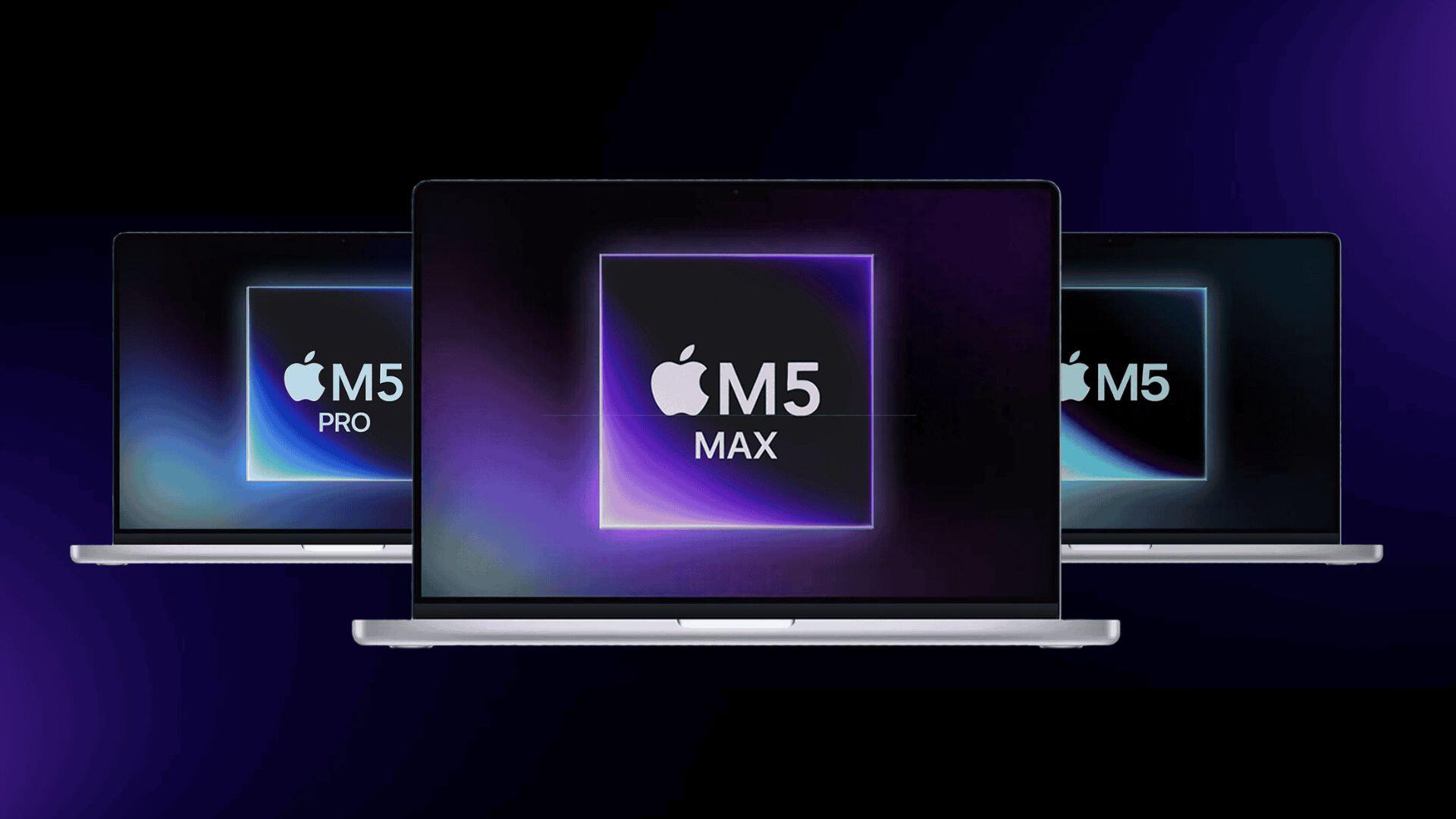
The Apple MacBook Pro with the M5 chip represents the next generation of Apple Silicon and marks a significant step forward in performance, graphics, and on-device intelligence. Announced in October 2025, the M5 is designed to power the future of AI-driven workflows, creative projects, and high-performance computing while maintaining Apple’s hallmark efficiency and sleek design.
The M5 chip builds on the momentum of its predecessors, offering faster CPU speeds, enhanced GPU capabilities, and smarter machine-learning performance. It’s not just an incremental upgrade; it’s Apple’s clearest sign yet that its future lies in AI-optimized computing.
A New Era of Apple Silicon
Apple’s journey through its Silicon series has been remarkable. The M1 chip began a revolution in 2020 by proving that power and efficiency could coexist in a laptop. With each generation — M2, M3, and M4 — Apple refined its architecture and improved thermal performance, battery life, and AI integration. The M5, however, stands out because it was designed from the ground up to handle modern AI workloads.
Built on a refined 3-nanometer process, the M5 chip delivers faster processing and lower power consumption. It can handle demanding tasks like 8K video editing, 3D rendering, and machine learning model training, all while consuming less power than its competitors.
Under the Hood: M5 Chip Architecture
At its core, the Apple MacBook Pro M5 features a 10-core CPU composed of high-performance and efficiency cores. This design allows the laptop to handle both lightweight and intensive tasks smoothly, from browsing to compiling massive codebases.
The GPU receives the biggest leap this generation. Apple has implemented a 10-core GPU with a neural accelerator integrated into each core, giving the MacBook Pro an incredible advantage for graphics rendering and AI computation. This translates to noticeably faster video effects, real-time rendering, and AI-based creative tools like image upscaling or background removal.
Unified memory bandwidth has also increased to around 153 GB/s, allowing the CPU, GPU, and Neural Engine to share data more efficiently. This ensures buttery-smooth performance even in multi-app workflows.
Performance and Real-World Experience
Early tests suggest that the M5 chip offers around 15% faster CPU performance compared to the M4 and more than 40% better GPU results in creative tasks. The gains are most visible in graphics-intensive applications and AI workloads such as 3D design, machine learning, and generative tools.
Users can expect dramatically faster rendering speeds in Final Cut Pro and smoother playback of high-resolution video files. In apps that leverage Apple’s Neural Engine — such as Photoshop, Logic Pro, or DaVinci Resolve — tasks that rely on AI processing are completed almost instantly.
The efficiency of the M5 architecture means that battery life remains one of the MacBook Pro’s strongest assets, lasting up to 24 hours on light use and comfortably delivering over 12 hours of demanding creative work.
Design and Display
While the M5 MacBook Pro keeps the same beloved aluminum design, Apple’s attention to detail is evident. The 14-inch Liquid Retina XDR display continues to impress with its high brightness, stunning color accuracy, and smooth 120 Hz ProMotion refresh rate. It’s ideal for creators who demand true-to-life visuals.
The familiar array of ports — including Thunderbolt, HDMI, SD card slot, and MagSafe charging — remains unchanged. Apple has refined internal cooling slightly to handle the new chip’s higher sustained workloads while keeping the laptop whisper-quiet even under stress.
AI at the Core
What makes the M5 truly special is its deep integration of artificial intelligence into every layer of performance. Each GPU core now includes a Neural Accelerator, giving the MacBook Pro a massive edge for AI-based applications.
From real-time object detection in video editing to faster Siri responses and offline AI processing, the M5 is built for a future where intelligent computing happens locally. This approach enhances privacy while boosting speed since fewer AI operations rely on cloud servers.
Apple has also enhanced macOS to take advantage of these new capabilities. System apps, including Photos, Notes, and Safari, now leverage on-device intelligence for tasks like content recognition, text prediction, and context-aware search.
Battery Life and Efficiency
Despite the significant boost in performance, the MacBook Pro M5 remains incredibly efficient. Its advanced fabrication process and intelligent energy management allow it to maintain the same all-day battery life Apple is known for.
Even when running intensive workloads like 8K video rendering or large AI models, the M5 manages power distribution dynamically to maximize performance without overheating. The fan rarely spins up, and when it does, it’s almost silent.
This combination of power and efficiency makes the MacBook Pro M5 one of the most balanced laptops on the market — perfect for professionals who need both portability and raw performance.
Best Exhaust fans Price in India
How It Compares
Compared to the Intel Core Ultra and AMD Ryzen AI series, the Apple M5 easily leads in energy efficiency and integrated AI performance. In multi-threaded CPU tasks, it competes closely with Intel’s high-end processors, but its GPU and Neural Engine outperform them in creative and AI workflows.
When placed side-by-side with the previous M4 chip, the M5’s biggest gains come in GPU and AI processing rather than raw CPU speed. This clearly shows Apple’s strategy to prioritize the future of AI-driven computing rather than simple clock-speed improvements.
Who the M5 MacBook Pro Is For
The MacBook Pro with the M5 chip is ideal for creative professionals, software developers, data scientists, and anyone working in media production or AI development. Its ability to handle complex multitasking makes it perfect for video editors, designers, and music producers.
However, for casual users or those who already own an M4 MacBook Pro, the upgrade might feel incremental unless your work heavily involves AI or graphics-intensive software. Students and office users will still enjoy the benefits of speed, efficiency, and unmatched battery life, but the real magic shines in creative and computational fields.
Pricing and Configurations
The M5 MacBook Pro starts with 16 GB of unified memory and 512 GB of SSD storage, with options scaling up to 128 GB of memory and 4 TB of SSD. Prices vary by region, but as with previous generations, higher configurations can become quite expensive — especially for those needing maximum memory and storage.
Apple continues to offer trade-in options and financing, making it easier for professionals to upgrade without breaking their budgets.
Pros and Cons
Pros
- Outstanding AI and GPU performance
- Excellent battery life for a performance laptop
- Gorgeous XDR display with ProMotion
- Quiet and cool under heavy workloads
- Expanded storage configurations
Cons
- CPU improvement is modest
- High-end models are expensive
- Same external design as before
- Limited connectivity updates
Expert Insights and Early Reviews
Early reviewers and tech experts have praised the M5 for its incredible AI performance and seamless integration with macOS. Many note that while the physical design remains unchanged, the internal leap is substantial — particularly for professionals who rely on GPU acceleration or machine learning tools.
Users report buttery-smooth operation even during demanding editing and rendering sessions, with no noticeable lag or overheating. It’s a refined machine that feels familiar but far more capable.
6000mAh Battery Mobile Phones Price in India
FAQs About the Apple MacBook Pro M5 Chip
Q1. What’s the biggest improvement in the M5 MacBook Pro?
The largest leap comes from its enhanced GPU and integrated Neural Accelerators, which significantly boost AI and creative workloads.
Q2. Is the M5 worth upgrading from M4?
If your work involves video editing, 3D design, or AI-based applications, absolutely. For casual use, the performance gains may feel modest.
Q3. How long does the battery last?
The MacBook Pro M5 delivers up to 24 hours of light usage or around 12 hours of heavy workloads — impressive for its power.
Q4. Does the M5 run cooler than previous models?
Yes. The new 3-nanometer process and dynamic thermal optimization help it stay cool and quiet even during intense processing.
Q5. Are there design changes in this model?
Externally, no. Apple kept the same sleek aluminum body and XDR display, focusing improvements inside the chip.
Q6. Will macOS features take advantage of the M5 chip?
Yes. Many macOS apps already utilize the Neural Engine, and future updates will further enhance on-device AI capabilities.
Conclusion: A New Standard for Intelligent Performance
The Apple MacBook Pro M5 chip is more than a performance upgrade — it’s a glimpse into the future of intelligent computing. With its AI-first design, exceptional efficiency, and raw graphics power, the M5 defines what a modern laptop should be.
For creators, developers, and professionals seeking long-term value and cutting-edge performance, the M5 MacBook Pro is one of the best investments you can make in 2025. It’s fast, smart, and built to handle the next decade of digital innovation.Learn more about Apple’s latest hardware updates on Apple’s official newsroom