
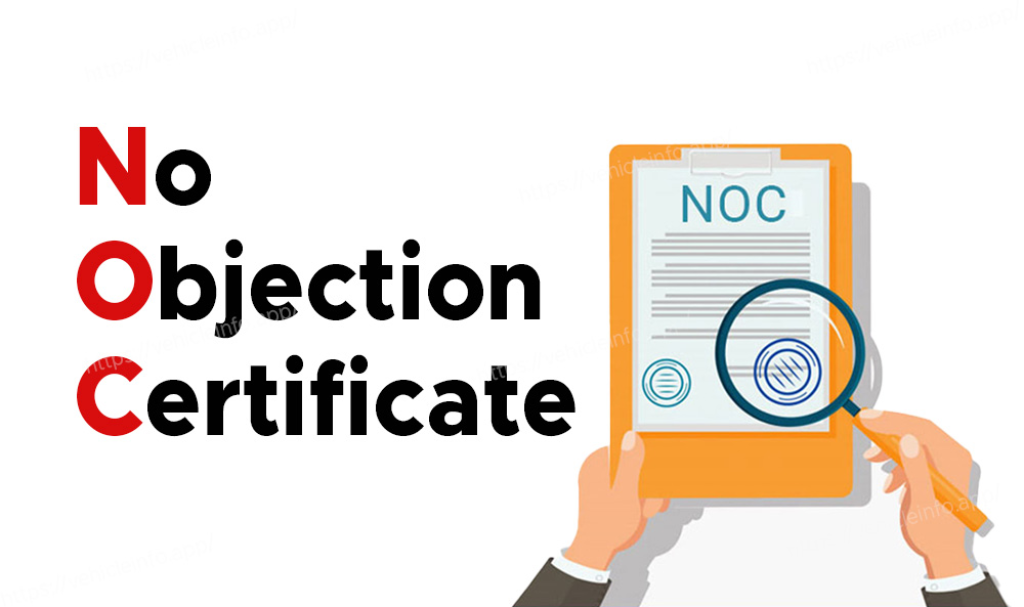
A No Objection Certificate (NOC) is a formal legal document issued by an organization, authority, or individual stating that they are not opposed to the particulars in the certificate, any transactions to which the certificate refers or any requests in the certificate. NOCs are being used for official, administrative, and legal purposes specifically to provide a level of certainty to individuals so that there are no obstacles to their activities – such as the closure of a loan, transfer of a property, employment, etc.
Read also : What is Cancelled Cheque and How to Write It ?
NOC Certificate for Loan Closure
A NOC for loan closure is a document provided by the lender (bank, NBFC, or financial institution) that confirms the borrower has paid back the loan amount fully, and there are no dues remaining. The NOC certificate would typically mention basic details like the name of the borrower, property address, and closure date, and it cancels the lender’s claim over the collateral. It is important to collect this certificate from your bank or lender upon repayment of the loan, particularly if the loan was secured with collateral because it allows the borrower to obtain ownership rights over the property again. It is also a good mechanism to avoid disputes that arise in the future.
Advantages of a NOC Letter
Obtaining an NOC after closing a financial obligation offers several key advantages:
- Proves official closure of loan or agreement, safeguarding against disputes and legal complications.
- Enables smooth property transfers or vehicle re-registration by clearing all dues.
- Maintains a healthy credit score by allowing submission of closure documents to credit bureaus.
- Helps avoid penalties, delays, and confusion regarding ownership or liabilities.
Loans That Require a NOC Letter
Most secured and unsecured loans require an NOC on closure:
- Home Loans
- Car and Vehicle Loans
- Personal Loans
- Business Loans
- Loan Against Property
- Loan Against Shares
- Education Loans
Read also : What is EMI: Full Form, Meaning, Calculation, and How it Works
How to Get a No Objection Certificate
While most lenders send the NOC automatically to your registered address, borrowers should actively request it upon loan closure:
- Write to the lender asking for the NOC as well as the return of original documents.
- Ensure all pending charges and dues are paid.
- Update contact/address details to avoid dispatch errors.
- For secured loans, submit the NOC to relevant authorities (registrar, RTO, etc.) to remove lien or hypothecation.
What to Do If You Misplace Your NOC Certificate?
Losing an NOC can complicate future transactions:
- Contact the issuing authority and request a duplicate NOC.
- Provide proof of identity and loan closure for reissuance.
- If involved in a property or vehicle transaction, delay activities until a new NOC is secured.
- Retain digital copies for convenience.
Documents Required to Get No Objection Certificate
Documents typically needed to obtain an NOC include:
- Loan closure receipt or statement
- Proof of identity (Aadhaar, PAN, passport, etc.)
- Address proof
- Original loan or agreement documents
- Application/request letter for NOC
- Property or asset documents in case of secured loans
Instances Where NOC Is Required
NOCs have a wide variety of applications beyond loans:
- Employment changes & resignations
- Property purchases, sales, or rentals
- Vehicle ownership transfers
- Educational institution transfers
- Construction permits and municipal approvals
- Environmental clearances
- Immigration and visa applications
Read also : How to Check UTI PAN Card Status Online – Step by Step Guide
What Is the Validity of a NOC?
The validity of a NOC depends on its purpose and issuing authority:
FAQ’s
A legal document confirming that the issuer has no objection to the specifics and the activity mentioned therein.
It certifies that all dues are cleared, protects against future claims, and allows removal of liens over property or assets.
Yes, most registrations, transfers, and re-sales need a valid NOC to confirm there are no pending liabilities.
Contact the issuing authority with proof of closure and apply for a duplicate document.
Yes, it serves as legal proof of closure and clears the borrower’s record.
Loan closure statement, identity and address proof, original loan documents, and application letter.
Yes, validity varies with purpose (property, employment, construction, etc.), requiring periodic renewal in some cases.